
Robot battles in augmented reality
ForwARdgame
3 months
UX/UI Design, art direction, visual design
Figma, Photoshop, Unity Engine
The game
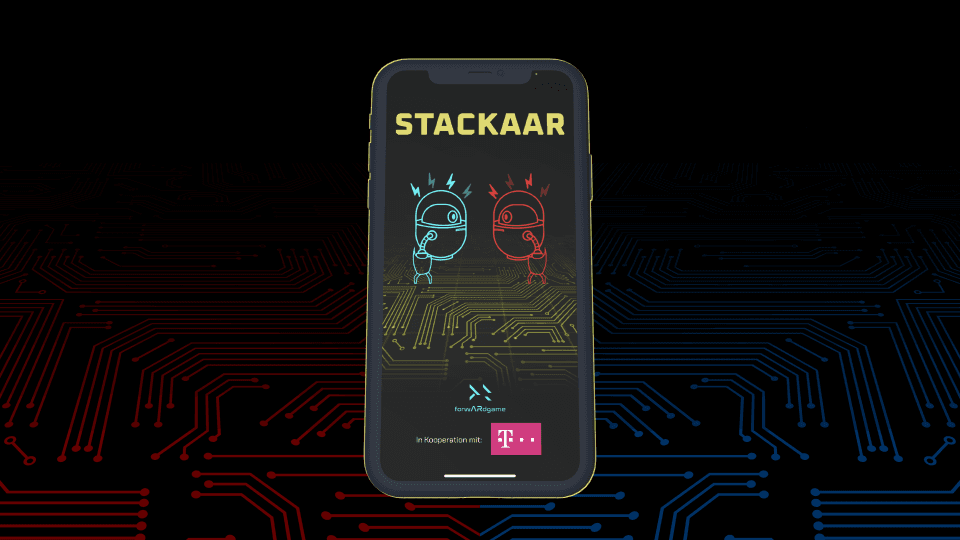
STACKAAR is a new game experience created by forwARdgame, in partnership with Deutsche Telekom. It features AAR (Active Augmented Reality) gameplay where the player controls a robot in an immersive factory setting that overlays the real world.
The players primary goal is to collect more cubes than their opponent, before the time expires. Players can use these cubes as a resource that can be melted at the factory hatch, producing throwable orbs to disrupt the other player.
In this case study I will break down my contributions to building STACKAAR, from initial game concepting through to the playable beta version.
Moodboard
The projects starting point came from the desire to test the types of player actions possible in an Augmented Reality game.
We wanted the user to stack virtual objects which required a range of physical movement, from crouching down to reaching up high. Naturally we gravitated towards the theme of a factory, adding misbehaving robots that battle after hours.
Once we settled on our robot theme I started assembling a mood board which helped us define our direction: a grungy yet playful sci fi setting.

Onboarding
Intoducing users to gameplay in augmented reality can be difficult, it does not yet feel as familiar as traditional gaming experiences.
Through providing a detailed step-by-step tutorial, we wanted to help the user feel comfortable performing the key actions required to play. The user is the controller and operates the robot through their own movements.
The wireframes broke down the processes for starting a game, from play area setup to tutorial completion. With these wireframes I also started to establish the imagery included on each tutorial screen, mapping a series of gif animations to help the user grasp the game mechanics more intuitively.


Gameplay
The video below provides a look at the game in Spectator mode, displaying a wide view of the game space and and 3D elements that the player interacts with..
3D elements
I have included some of the early concepts of the interactive elements that feature in the game.
In the early versions of the game we explored using a hanging scoreboard, in the end we opted for this to be placed in the middle of the game area. This helped to keep the player focused on their key task of collecting cubes, while tracking their opponent.
The game area itself was designed to appear like circuit boarding, in testing this worked well as it layered with the real world, rather than fully replacing it.

